



Interview with Irina Berezina, Founder & CEO of Mood Atelier
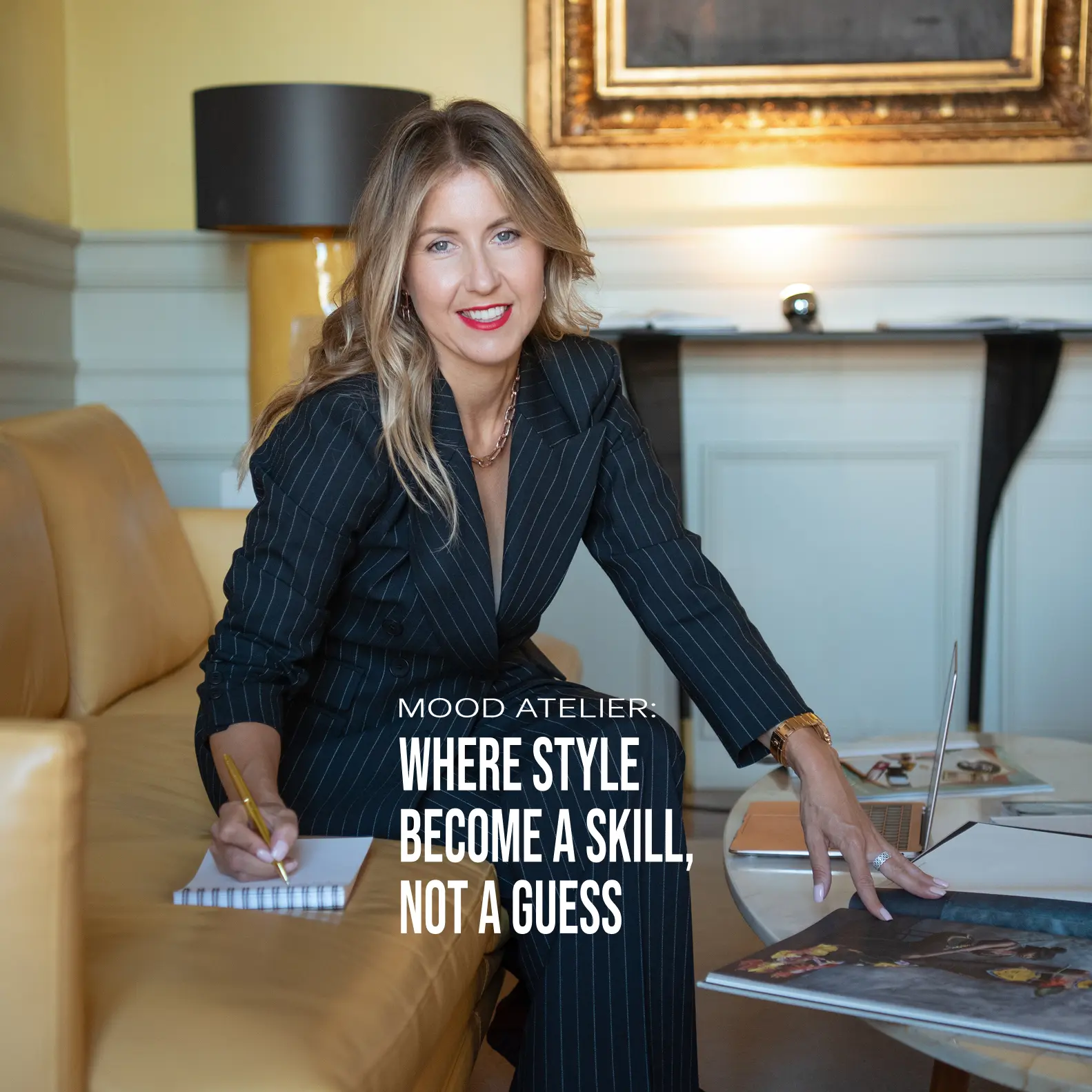
Background & Personal Story
Irina, your professional background is rooted in technology and innovation. How did this journey eventually lead you into the world of style and personal expression?
I’ve spent the last 15 years building and scaling companies across tech, innovation and digital-first industries. My world was always fast-paced, analytical and very male-dominated. But privately, I’ve always had a deep appreciation for aesthetics, clarity and self-expression. Somewhere along the way I realised something ironic: I could build sophisticated technology systems, yet I still had days where I stood in front of a full wardrobe of beautiful pieces I genuinely loved and somehow, even with all that, I still couldn’t put together an outfit that actually made sense to me. It always made me laugh a little, I could run complex projects, but getting dressed still felt like guesswork.” That moment wasn’t dramatic, but it was honest. Style wasn’t a luxury problem, it was a daily friction point affecting confidence, presence and how I showed up as a leader and a woman. And I saw this same tension in so many women around me. That connection between identity and personal presentation became impossible to ignore. That’s what eventually pulled me from pure tech into the world of style intentionally.
Founding Mood Atelier
How was Mood Atelier born? What personal experience or challenge sparked the idea, and what gaps did you notice in how women perceive fashion?
Mood Atelier was born from a mix of frustration and curiosity. I saw women with incredible careers, families, responsibilities, intelligence; yet style still felt overwhelming, inconsistent or dependent on external approval. The industry often teaches women to chase trends, not understand themselves. What I realised is that women don’t lack taste. They lack a system. There was no place where personal style, emotional alignment, education and human expertise were structured into a clear, teachable process. Everything on the market was either trend-driven, influencer-driven or too superficial to create real transformation. So I built Mood Atelier to fill that gap, a place where style becomes a skill, not a guessing game.
Style as a Skill
You believe style is not an intuitive talent but a learnable, modern skill. Why is this distinction important?
If style is treated as talent, most women assume they don’t have it. But style is the sum of psychology, decision-making, proportion, colour, lifestyle and emotional clarity. When broken down, it becomes incredibly teachable. This distinction matters because it gives women back their agency. You don’t need to be born stylish, you need the right framework. The Mood Atelier Method.
How does Mood Atelier help women translate their personality, lifestyle, and emotions into their wardrobe?
We created a methodology that starts with the woman, not the clothes. Instead of asking “What should I wear?”, we ask: Who are you today? How do you move through your life? What emotions do you want your clothes to support? What does your lifestyle actually require? From there, our stylists and The Mood Atelier Method translate personality and emotion into silhouettes, textures, colours and rituals that make dressing intuitive. Practically speaking, many women also want clarity on something very simple: how do I highlight the right parts of my body so I look elegant, sophisticated, or effortlessly smart-casual? This is where our method becomes very hands-on; teaching proportion, balance and subtle adjustments that instantly refine an outfit without needing a completely new wardrobe. It’s a design process applied to the self.
Differentiation
Many platforms now use AI for styling. Why was it important for Mood Atelier to stay rooted in human expertise?
I come from the tech world, so I love innovation, but I also know its limits. AI can categorise your wardrobe. It cannot understand the moment a woman says, “I don’t feel like myself anymore.” It can’t translate confidence, transitions, motherhood, leadership, heartbreak or reinvention into clothing that feels like home. Style is human. Humans understand nuance and emotional complexity. That’s why Mood Atelier is powered by real stylists with cultural perspective, sensitivity, and experience you cannot automate. And especially when it comes to more sensitive subjects like body changes, confidence shifts, lifestyle transitions, there’s nothing more reassuring than interacting with a real stylist who gives objective, positive and grounded feedback. She adjusts your style as needed, guides you with empathy and you never have to worry about ‘training’ an algorithm to understand you.”
How does your global team of stylists shape the learning experience?
Our stylists come from Paris, Milan, London, Lisbon, New York. Each with their own aesthetic, cultural view, and way of interpreting style. This diversity expands the learning experience. Women don’t just learn how to dress; they learn how to see themselves. Practically, the stylists are real, warm, brilliant women and men, each bringing years of experience working with different body types, personalities and cultural backgrounds. They understand the physiology behind how women dress and move, and they know how to translate that into styling that feels natural and empowering. Their diverse perspectives make the guidance richer, more nuanced and deeply complementary for our clients. It's almost like having a very good friend who knows exactly how to talk to you to bring out your best.”
Learning Experience
What makes the immersive learning model so powerful compared to classical styling or short-term fashion advice?
Classical styling solves today’s problem: “I need something to wear.” We solve the deeper problem: “I want to understand myself.” Our process works because it builds one layer on top of another: in the right sequence. Style is a little like learning a language: you can’t memorise a few beautiful nouns and expect to speak fluently. You need verbs, structure, context and rhythm. The same goes for your wardrobe. When you learn each element step by step like body proportions, colour, silhouette, personal identity, emotional cues, everything finally clicks. Dressing becomes intuitive rather than overwhelming. The Mood Atelier Method creates long-term transformation because women learn the why behind their choices. After eight weeks, they don’t just dress better, they think differently. It’s the difference between getting a fish and learning how to fish: except the fish is a perfect blazer that works 365 days a year.
Mindfulness, Sustainability & the Future
In what ways does Mood Atelier challenge the trend-following culture that dominates social media?
We don’t reward constant change; we reward consistency and clarity. Social media sells impulsive, disposable identity shifts. We teach women to anchor into their true identity. Our clients stop buying for dopamine and start buying for alignment, instead of copying influencers who look flawless in outfits that suit their proportions, their lifestyle and often a team of people behind the scenes. We help women avoid that familiar cycle where you buy something, feel you should wear it, and then quietly realise it just doesn’t feel like you. Alignment lasts longer than any trend-driven impulse purchase.””
How does the program naturally encourage more sustainable behaviour, and how do you see the future of women’s style evolving over the next decade?
When women understand their style deeply, they stop over-shopping. Sustainability becomes a byproduct of self‑knowledge. Our approach also naturally reduces waste: women learn to re-wear their clothes in multiple ways, invest in high‑quality essentials rather than disposable trends and make purchases with long‑term clarity rather than emotional spikes. We also encourage wardrobe longevity because when you truly understand your body, your proportions and your personal style, you start choosing items you will actually wear. You stop collecting ‘beautiful mistakes’ and instead build a wardrobe where every piece has a purpose. This naturally leads to fewer but better items, combinations that serve you for years, and a personal aesthetic that evolves with you rather than with trends.
Leadership & Empowered Femininity
As a woman leading a digital platform in tech and fashion, how do you view your role in shaping a new category?
I see myself as part founder, part educator, part translator between two worlds: the efficiency of technology and the emotional intelligence of style. Empowered femininity to me means building with clarity, softness and high standards I’m also ambitious, and I fully believe Mood Atelier is creating an entirely new market, not a niche within fashion, but a completely new category in how women understand and build their style. The method, the structure, the rules; they solve problems women have carried for years but never had a framework or language for. We’re not just improving how women dress; we’re establishing a new discipline, redefining how women learn style, make decisions and connect with themselves through their wardrobe. Women don’t need to choose between intelligence and beauty, logic and emotion. We can build new categories precisely because we live in both.